Hardware Giants No Longer Sell Hardware: The Anatomy of the Platform Era from Siemens to HPE

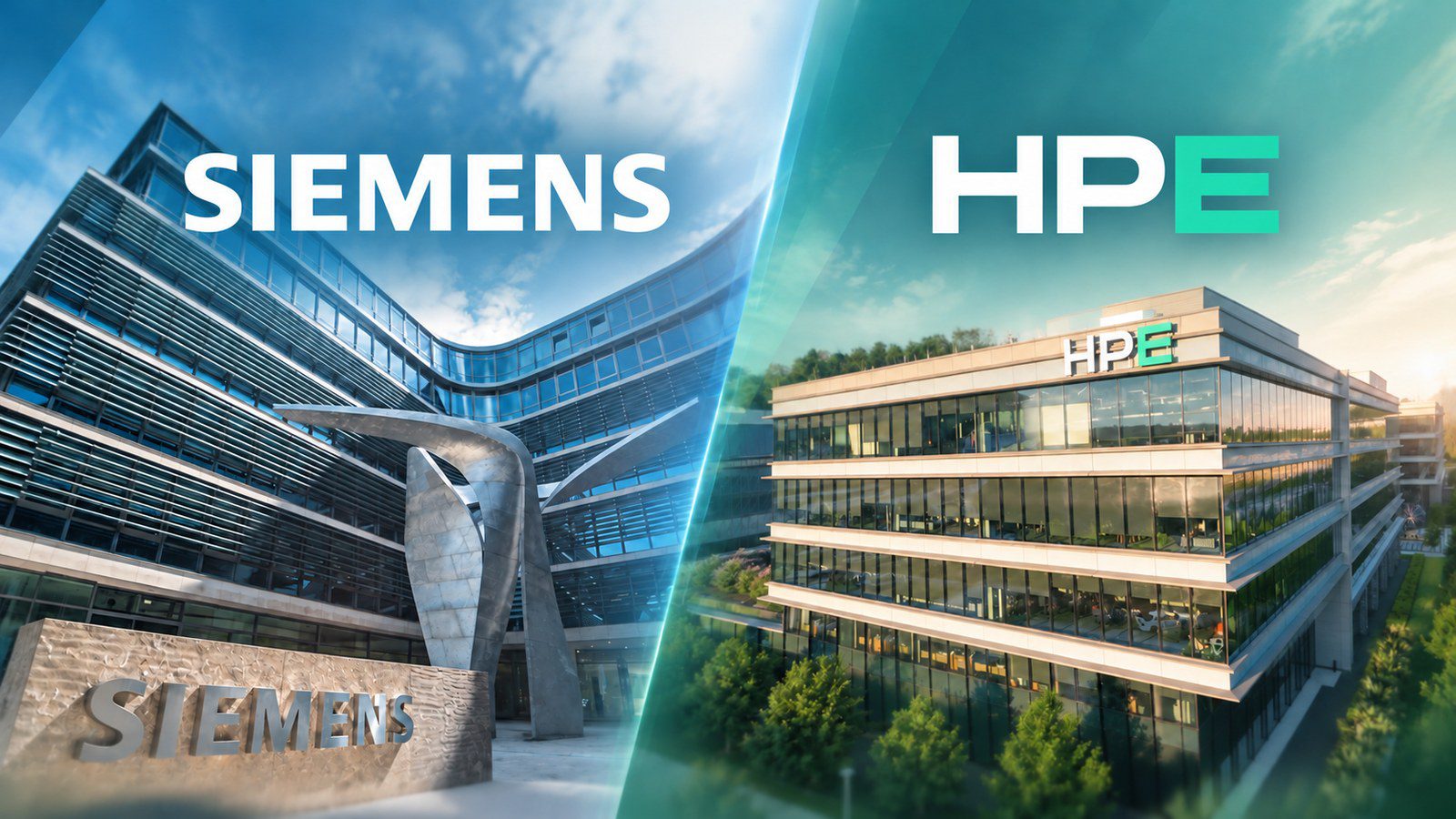
Competition is no longer about who builds the best hardware. The question has changed: Who manages the customer’s entire operation?
In industrial automation and enterprise IT infrastructure, value is shifting from physical hardware to the control plane and platform layer. Hardware isn’t dead; it has evolved into a strategic Trojan Horse to bring software, telemetry, data, and AI services into the customer’s facility. From Siemens transforming factories into an operating system with Xcelerator to HPE turning the VMware crisis into enterprise market share with Morpheus VM Essentials and GreenLake, the winners are not selling hardware or pure software; they are building platforms that bind customers into their ecosystem.
Thesis
In the 1990s, the main question was who built the best hardware. In the 2000s, the industry rushed into software, following the “software is eating the world” mantra. But just writing software wasn’t enough. Companies that tried to sell software as a standalone product, detached from the hardware, failed. The real winners were quietly building something else: platforms that bring hardware, software, data, AI, and services together under one roof.
Today, the game is entirely different: who manages the customer’s entire operation? Siemens, HPE, Schneider, ABB, Cisco, Dell, Emerson, and Rockwell no longer just sell hardware. They don’t just sell software either. They sell platforms. And once a company establishes this structure, it heavily dictates how the customer works.
This article breaks down why this shift is inevitable, why the “transition to software” narrative is incomplete, the difference between platform builders and those stuck in pure software, and the financial evidence behind it all.
Hardware Isn’t Dead, Its Role Has Changed
Let’s be clear: hardware is not dead. NVIDIA, ASML, and TSMC are among the world’s most valuable companies. A semiconductor shortage can halt the global supply chain. GPU clusters are the backbone of the AI revolution.
What changed is not the hardware itself, but its role in the business model. In the past, hardware was the final product. You sold it, the customer used it, and that was it. When the contract ended or the device aged, the customer could easily swap it out for a competitor’s hardware. This meant one-off revenue, unpredictable cash flow, and margin pressure.
Today, hardware is the physical carrier of the platform. Sensors, servers, PLCs, switches: these are entry points to bring the software and service layer into the customer’s facility. That’s where the real value lies.
Once installed, the platform built on that hardware starts running the customer’s daily operations. Design, production planning, disaster recovery, predictive maintenance, automated decisions: all of these happen at the platform layer. If a customer wants to remove the hardware, they basically have to rip out their own operational backbone.
The “Let’s Be a Software Company” Trend and the GE Lesson
This transition wasn’t straightforward. Most of the industry simply said, “we are moving to software.” Marc Andreessen’s 2011 “software is eating the world” article justified this push. Hardware companies started buying software firms one by one, rebranding themselves as “digital industrial companies.”
The clearest failure of this trend was GE Predix. In 2015, GE made a massive claim: it was going to be the world’s largest digital industrial company. It invested billions and built an industrial IoT platform called Predix. But they made a critical error: they positioned the software as a standalone product that could be sold independently of their hardware. Instead of tightly integrating with GE’s own equipment, Predix tried to be a generic cloud platform for everyone.
The result? A software library that didn’t match field realities and failed to embed into the customer’s actual operations. GE Digital was restructured and scaled down in late 2018, leading to billions of dollars in write-downs.
GE’s mistake wasn’t “moving to software.” Their mistake was thinking software was the final product. Looking at Siemens during the same period shows a completely different approach. Siemens bought UGS, Mentor Graphics, Mendix, and Altair starting in 2007. But they didn’t sell them as disconnected software products. Every acquisition was a building block for a unified system called Xcelerator. Design, simulation, low-code, computational intelligence: they combined all of these into a single platform architecture that sits on top of the hardware and directly embeds into the customer’s workflow.
The industry talk was a two-step plan: move to software first, figure out platforms later. But the winners focused on the platform from day one. That’s exactly what separates the winners from the losers: the losers thought software was the destination, but it was only halfway there.
The Trojan Horse Strategy: How Hardware Opens the Door
The software saturation in the B2B market makes this strategy necessary. With the rise of AI and LLMs, standard SaaS products can be cloned in weeks. If a software tool can be easily rebuilt, it’s hard for it to maintain a solid defensive moat.
Hardware lives in a different reality. R&D is expensive, manufacturing is complex, and the equipment has to run flawlessly in the field. But once it gets into the customer’s data center, factory floor, or power grid, it creates a footprint that rival software companies cannot easily access.
From the outside, it looks like a standard industrial sensor, a network router, or a server. But inside, it has telemetry capabilities, embedded software, and direct platform connections. These activate the moment the device integrates into the customer’s system.
This strategy works especially well in conservative industries. Sectors like defense, healthcare, energy, and manufacturing often resist pure software sales due to heavy bureaucracy and established habits. But they are much more willing to buy a familiar piece of hardware that solves a physical problem. Once the hardware is in, the embedded platform naturally takes over the operation. The physical asset is more than just a delivery method; it gives the manufacturer exclusive access to telemetry data, security certifications, and value-added services like predictive maintenance.
Siemens: Turning the Factory into an Operating System
Siemens’ transformation isn’t a coincidence, and it didn’t happen overnight. Traditionally known as a PLC and SCADA manufacturer, the company saw that physical components would eventually become commodities. They’ve been executing a strict acquisition and integration strategy for over twenty years: moving into PLM, CAD, and CAM by acquiring UGS in 2007; adding electronic design and simulation with Mentor Graphics in 2017; building a low-code layer with Mendix in 2018; and finally, the $10.6 billion acquisition agreement of Altair Engineering announced in late 2024.
The Altair Deal and the Xcelerator Portfolio
The Altair deal took this to the next level. When Altair’s high-performance computing and simulation capabilities merge with the Siemens Xcelerator platform, it goes beyond standard industrial software.
Customers don’t just design a product anymore; they use AI to run virtual stress tests for material fatigue, thermal dynamics, and electromagnetic interference. Here is the structure Siemens built: the PLC stays on the factory floor as physical hardware. On top of it sits a lifecycle platform that covers everything from product design to simulation, production optimization, and after-sales maintenance. Once a factory buys the machine, they can’t simply walk away from Xcelerator, the brain running it.
Siemens’ Growth and Profitability Metrics
Siemens closed FY 2025 with €78.9 billion in revenue and €10.4 billion in net income. In Q2 2026, orders jumped 18% to €24.1 billion. Their total order backlog hit a record €124 billion.
The Digital Industries software division alone brought in €1.6 billion, growing 14% year-over-year for the quarter. Organic annual recurring revenue (ARR) grew 11% to €5.5 billion.
Hardware sales are always vulnerable to US tariffs, delayed rail projects, and currency fluctuations. Despite this, Siemens maintains a solid 15.4% industrial operating profit margin. The reason is simple: the margins of the software and platform layer are independent of the hardware.
HPE: Building the Operating System for the Data Center
Just as Siemens integrates the factory, HPE integrates the data center in the exact same way. Originally known for selling servers, storage, and networking hardware, HPE realized early on that pure hardware margins were being squeezed out by cloud providers.
HPE’s strategic shift comes down to one core idea: the cloud isn’t a place, it’s an operating model. Put the hardware on the customer’s premises, but manage it as a service through the GreenLake platform. To build this, they acquired Zerto for disaster recovery, OpsRamp for AIOps, Morpheus Data for hybrid cloud orchestration, and Juniper Networks for the networking layer.
The VMware Crisis and the VM Essentials Opportunity
The clearest example of HPE’s platform strategy happened in 2026. When Broadcom bought VMware, shifted licensing models to core-based subscriptions, and caused prices to soar, it created a shockwave in the enterprise IT world. Customers faced a double cost problem: having to pay for the old license and the new infrastructure at the same time.
HPE immediately turned this into a market opportunity:
- Aggressive Pricing and HVM Architecture: With Morpheus VM Essentials, HPE delivered an enterprise KVM-based HPE HVM hypervisor layer that allows customers to manage their VMware ESXi clusters from a single console, offering up to 90% savings at around $600 per socket.
- Hardware and Storage Interlocking: HPE tightly integrated Alletra MP enterprise storage and advanced Virtual Switch networking directly into the control plane. They backed this up with aggressive incentives: a free year of licensing for customers buying AMD servers, dropping Zerto data migration licenses to $1, and giving three years of free distribution to 600 authorized resellers.
As HPE CEO Antonio Neri put it: once a customer adopts the hybrid control plane, the entire infrastructure falls under the GreenLake umbrella, regardless of the underlying virtualization technology. This strategy goes far beyond just selling servers.
HPE’s Financial Surge and Order Backlog
GreenLake’s ARR was $1.3 billion in 2023. By Q4 2025, it reached $3.2 billion with 63% organic growth. In Q2 2026, total revenue hit a record $10.7 billion, up 40%.
The Cloud and AI segment grew 32.7% to $5.5 billion, and Networking jumped 148% to $2.7 billion thanks to the Juniper integration. The AI order backlog now exceeds $6.3 billion. Non-GAAP earnings per share hit $0.79, beating Wall Street expectations.
Not Just a Two-Company Story
This isn’t an isolated trend for Siemens and HPE. Market leaders across various verticals are doing the exact same thing:
- Schneider Electric: Moved away from just selling traditional panels and switches to focus on its EcoStruxure platform. The company’s “Digital Flywheel” revenue grew 15% organically in 2025, hitting €25 billion: making up 62% of their total revenue. Their adjusted EBITA margin stands at 18.7%.
- ABB: Sold off its traditional power grids unit in 2020 to focus entirely on software, robotics, and electrification. By acquiring 3D machine vision startups like Sevensense, they turned standard hardware into “robotic agents.” In 2025, orders hit $36.8 billion, with a 19% operational EBITA margin.
- Rockwell Automation: Bought Plex Systems for $2.2 billion to layer cloud-based ERP and MES on top of its hardware. Total ARR grew by 8%.
- Emerson: Shifted from industrial sensors to process optimization software by buying the remaining 45% of AspenTech for $7.2 billion. The important detail here: Emerson paid 29 times AspenTech’s 2025 Adjusted EBITDA. When a hardware company pays that kind of multiple for a software asset, they are valuing it exactly like a SaaS company.
- Cisco: Bought Splunk to turn network traffic data into a security and observability platform. Today, 54% of its revenue comes from subscriptions, and total ARR is nearing $30 billion.
- Dell Technologies: With revenues exceeding $100 billion in FY2025, Dell isn’t just selling servers; through its Palantir partnership, it offers an on-premise AI operating system. Its AI server order backlog currently sits at $43 billion.
The Control Plane: The Modern Operating System
What these companies are building aren’t basic cloud dashboards or desktop apps. In technical terms, this is called a “control plane.” Traditional operating systems were built around deterministic processes: they relied heavily on human input and simple system calls. Modern data centers and smart factories are far too complex to be run by static rules.
This is where autonomous agent architectures come in: the pieces of the system (servers, CNC machines, network routers) gather data independently, assess the environment, and purpose-built AI agents talk to each other to keep things running.
For example: the digital twin feature in Siemens’ Xcelerator takes real-time data from a PLC on the assembly line, runs it through Altair simulations, and if it detects mechanical fatigue, it automatically tells the production planning agent to swap the part. This isn’t basic automation; it’s a probabilistic decision-making engine embedded right into the hardware.
This is the real advantage hardware companies have over pure cloud providers like AWS, Microsoft, and Google: they own the edge. A cloud provider can’t directly calibrate a sensor on a factory floor. Hardware makers, because they own the physical infrastructure where the data is born, can run these AI agents with the lowest possible latency.
Why Are Financial Markets Rewarding This?
The financial logic behind this shift relies on three main factors:
- Recurring revenue: Instead of a one-time hardware sale, companies secure Annual Recurring Revenue (ARR) for as long as the customer uses the platform. HPE’s ARR hitting $3.2 billion or Cisco’s $30 billion subscription pool ensures steady cash flow, even during market downturns.
- Securing future earnings: Through order backlogs and remaining performance obligations, these companies are guaranteeing their balance sheets years in advance. Siemens’ €124 billion backlog and Dell’s $43 billion backlog send a clear signal to investors: the future revenue is already locked in.
- Valuation multiples: Markets typically give hardware companies low P/E multiples (around 10-15x). But software and service companies get much higher valuations. Companies that make more than half their money from recurring services (like Schneider at 62% or Cisco at 54%) are moving out of the hardware category and being valued more like SaaS companies. Emerson paying a 29x EBITDA multiple for AspenTech is proof of this value shift.
A Note on Vendor Lock-in
It’s important to make a distinction here. Yes, these platform strategies create high switching costs. But lock-in itself isn’t automatically a bad thing. Apple creates lock-in. SAP creates lock-in. Cisco creates lock-in.
The real issue isn’t the lock-in; it’s whether the value the customer gets justifies the dependency. If a factory managing its entire production lifecycle through Xcelerator is deriving real operational value from this platform, the switching cost isn’t a problem: it’s a choice. But squeezing the existing customer base with price pressure, like Broadcom did with VMware, is abusing the customer’s dependency. And the market reacts to that difference immediately. HPE’s VM Essentials is the exact product of this reaction.
Conclusion: They Are Selling Platforms
Hardware gets you in the door, but the platform controls the future. If you sell a physical machine, you are allocating a narrow capability to the customer. When the contract is up, they can replace it with a different machine. But if you install a platform like Xcelerator, GreenLake, or EcoStruxure on top of this hardware and dictate the design, management, orchestration, disaster recovery, and autonomous decisions through this platform; you become deeply entrenched in the customer’s working culture and operating model.
The winners of the next decade won’t be pure software companies floating in the cloud. They also won’t be pure hardware makers stuck in low-margin manufacturing. The winners will be platform companies that use hardware to get inside the customer’s operations, and then integrate them into an AI-driven ecosystem. This is where the real competition is happening.
📚 References
Siemens Q2 FY 2026 Press Release and Earnings Call Transcript
Siemens–Altair Acquisition Announcement (SEC Filing, November 2024)
HPE Q2 FY 2026 Financial Results and Earnings Press Release
HPE Morpheus VM Essentials Product Documentation and QuickSpecs
CRN: HPE CEO Antonio Neri, Morpheus VM Essentials Interview (June 2026)
Schneider Electric FY 2025 Full Year Results Presentation
ABB Q4 2025 Press Release and Integrated Report 2025
Rockwell Automation FY 2025 Full Year Results
Emerson–AspenTech Full Acquisition Announcement and SEC Filing
Cisco FY 2025 Annual Report
Dell Technologies FY 2025/2026 Investor Presentations
Venture Atlanta: “Top Startup Industries to Watch in 2026” (Hardware-enabled software business models analysis)
📋 Related Links
🔗 Siemens Xcelerator Industrial Platform Portfolio
📂 HPE GreenLake Edge-to-Cloud Hybrid Control Plane
📄 Broadcom VMware Licensing Changes and Enterprise Analysis
Last updated: October 2026 | Version: 1.0