Physical Threat Vectors in Critical Railway Infrastructure: From Theft to Sabotage

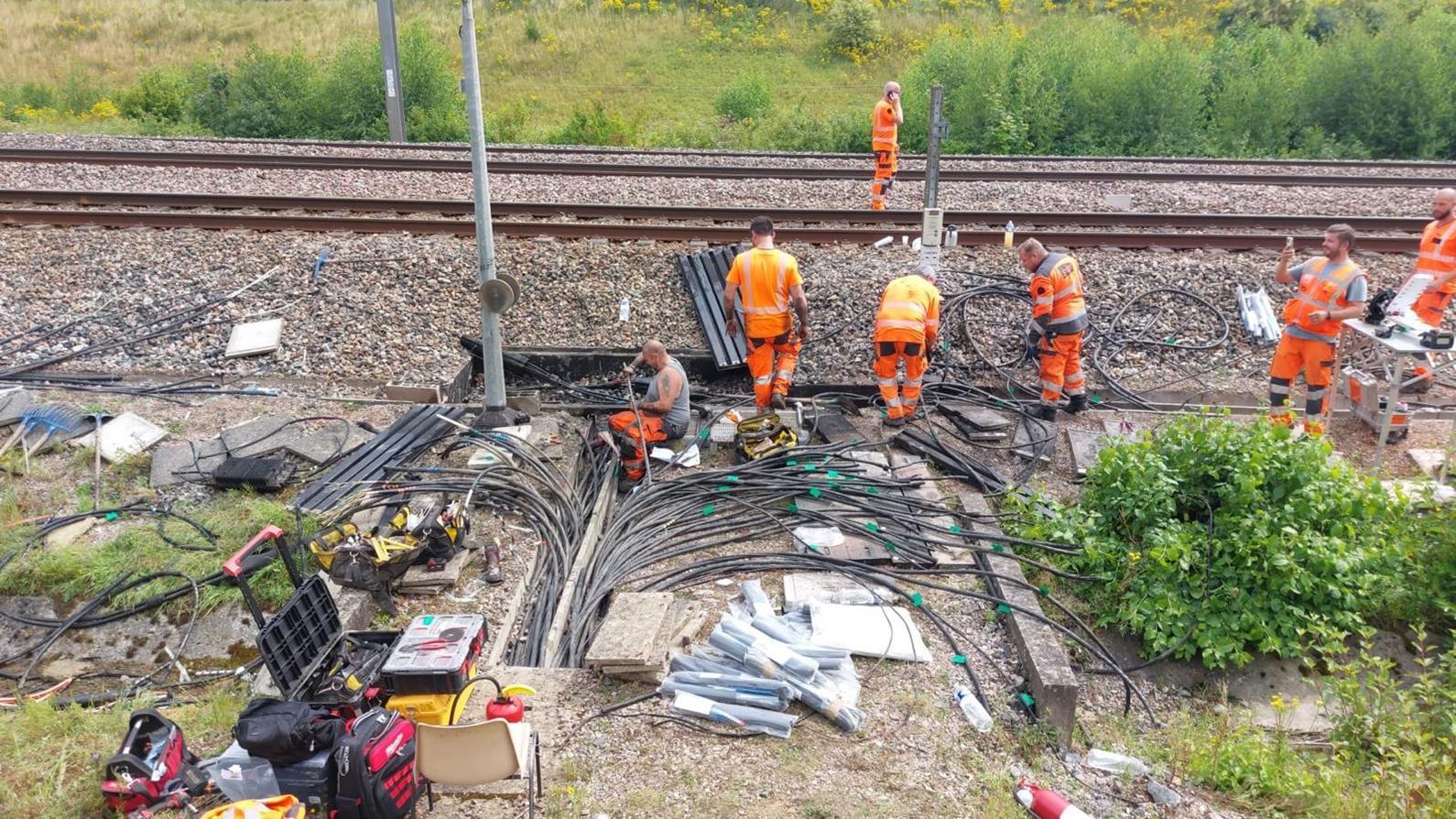
Infrastructure Resilience and Physical Attack Report on the Axis of Theft, Sabotage, and Terrorism
Global railway networks are exposed to multidimensional physical threats, ranging from economically motivated theft correlated with commodity price fluctuations to asymmetric sabotage risks triggered by geopolitical tensions. This study examines the statistical distribution of security threats, material-based attack vectors, and the methodology of deducing perpetrator motivation from field evidence, using Open Source Intelligence (OSINT) data, UIC (International Union of Railways) incident analyses, and LME copper price movements. The acquired data indicates that railway security is transitioning from a mere public order issue to a national critical infrastructure security framework.
Key Findings
- The Security Paradox of Material Transition: The technological transformation of infrastructures (the shift from conventional copper architecture to a fiber-optic communication backbone) alters the current threat profile.
- Motivational Distinction: Across reported incidents, the overwhelming majority are theft driven by scrap-metal value. Deliberate sabotage is a small minority, and terrorism-classified incidents are rarer still. This distribution matters operationally: countermeasures optimised for sabotage are poorly matched to the threat that actually dominates the incident log. Fiber-optic sabotage, though less frequent, is a strategic intervention aimed at creating system blindness and operational disruption.
- The Role of Forensic Field Analysis: Accurate interpretation of physical signs left at the crime scene (e.g., missing hardware vs. targeted incision) is the most critical parameter in determining the nature of the action (economic crime or asymmetric sabotage).
- Hybrid Processes: Recent incidents, particularly reported in the European region, indicate that the boundaries between organized economic crime events and sabotage elements considered to be state-sponsored occasionally blur.
Global Threat Landscape: Proportional Distribution
|
Threat Type |
Est. Global Share |
Core Motivation |
Target Material |
Characteristic Observation Regions |
|---|---|---|---|---|
|
Metal Theft |
Overwhelming majority |
Financial Gain (Scrap Value) |
Copper (Power, Signal, Grounding) |
South Africa, UK, USA, Germany |
|
Sabotage |
Small minority |
Creating Operational Bottlenecks, Asymmetric Impact |
Fiber-Optic Lines, Relay Cabinets |
Eastern Europe, France |
|
Terrorism |
Rare |
Threatening Public Safety, Psycho-Social Impact |
Vehicles in Transit, Terminal Facilities |
Conflict zones outside the scope of analysis |
(Source: General assessment in light of UIC Metal Theft on Railways Report data)
The Industrial Scale of Theft
The frequency of theft incidents tends to track metal prices closely enough that operators treat price spikes as a leading indicator. Particularly between 2010 and 2024, the rise in copper’s index value traded via the LME (London Metal Exchange) has made unprotected railway yard infrastructures potential targets for organized entities.
Reference Case – South Africa Transnet Operation: According to operator (Transnet) statements, approximately 1,121 km of cable theft incidents were recorded in the 2023 operational period. This magnitude requires the rebuilding of a considerable portion of the respective network every year, consuming the maintenance and repair budget. Evidence on the field confirms that dismantling operations are carried out in a mobilized manner by highly organized groups.
Sabotage Dynamics and Asymmetric Actions
According to reports and analyses by critical infrastructure protection agencies across Europe (including ENISA), an “intervention/sabotage” trend targeting logistical arteries has been monitored, especially following the outbreak of conflicts in Eastern Europe. In the 2024-2025 projection, various incidents directed at multiple infrastructures (energy, communication, railways) have been recorded specifically in Europe. These specific interventions are devoid of theft motives and are asymmetric actions designed to slow down strategic shipments, create communication outages, or establish blockades in the supply chain.
Infrastructure Material Analysis: Copper vs. Fiber Optic
Copper Architecture: Legacy Infrastructure
When evaluating the system as a whole, conventional railway lines remain reliant on copper transmission and grounding hardware across a large share of the network.
Critical Usage Points:
- Track Circuits (Impedance Bonds)
- Switch Point Drive Mechanisms
- Field Signal Instruments
- Electrification Catenary Grounding Equipment
Security Vulnerability Profile: The predominant portion of actual theft incidents encountered in the sector consists of lines carrying copper. A broad spectrum is at risk, ranging from catenary overhead line tension weights to thick-section underground grounding cables in substations.
Fiber Optic: The Communication Backbone
|
Line Technology |
Fiber Usage Rate |
Observation |
|---|---|---|
|
High-Speed Rail (HSR) |
High |
Chinese ERTMS/CTCS infrastructures, next-gen full integration |
|
Modernized Main Lines |
Medium/High |
Electrification and signaling modernization projects |
|
Last Mile |
Low |
Generally legacy copper cable and used for redundancy purposes |
Security Vulnerability Profile: Since fiber-optic systems carry glass strands, they possess no financial equivalent in the metal market.
The Paradox Brought by Material Transition
Although technological modernization offers the potential to reduce “Theft” rates; it renders cyber-physical systems more open and vulnerable to “Sabotage” scenarios. While an outage in the copper infrastructure mostly causes regional local security vulnerabilities and singular relay drops; the severing of a single fiber cable running through the main backbone creates a “Single Point of Failure” scenario capable of simultaneously bringing down GSM-R, interlocking communication data, and SCADA telemetry across an axis of hundreds of kilometers.
Physical Attack Typology: Crime Scene Analysis Matrix
Classifying physical damage through an architectural approach provides reference data for Root Cause Analysis:
Type A: Copper Cable Theft
- Target Points: Power transmission lines, catenary masts, substations.
- Forensic Findings:
- Material Loss: The main conductive parts of the cables have been removed from the facility.
- Processing Marks: Plastic sheath remnants and burn marks are found in the environment (done to reduce weight).
- Mobility Evidence: Large-scale tire, track, or dragging marks belonging to heavy transport vehicles are visible.
- Operation Window: Generally, time boundaries between 01:00 and 04:00, which are low traffic hours, are preferred.
Type B: Targeted Sabotage
- Target Points: Main fiber-optic distribution centers, critical relay/TCC communication cabinets, GSM-R station bases.
- Forensic Findings:
- Material Presence: All severed cables are abandoned at the scene.
- Detectable Precision: A surgical cut is made by specifically selecting thin data lines carrying direct communication data instead of grounding or high voltage lines.
- Simultaneity: Simultaneous actions are executed at different locations to decommission distributed redundancy lines.
Type C: Misidentification-Induced Damage
- Scenario Type: Material identification error by groups acting with theft motivation.
- Forensic Findings: Thick outer protective armored fiber cables are cut, but abandoned in place when the material content (glass strand) is realized. Additional traces of classical copper cutting attempts should undoubtedly be sought in the immediate vicinity.
Comparative Attack Analysis Matrix
|
Criterion |
Typical Theft Incident |
Strategic Sabotage Incident |
|---|---|---|
|
Primary Target Layer |
Energy, Power, and Grounding (Copper, Aluminum) |
Data, Telecommunications, and Signaling (Fiber) |
|
Physical Evidence Status |
Missing material, stripped insulators |
Abandoned severed ends, damaged panels |
|
Applied Destruction Method |
Grinding machines, brute force tools |
Damaging fine cutting tools, liquid flammable agents |
|
Location Distribution |
Open and easily accessible transit routes |
Tunnel portals, bridge viaducts, control room perimeters |
|
Impact Continuity |
Sequential, scattered, and continuous breaches |
Rarely observed but simultaneous planned actions causing multiple vulnerabilities |
Sample Field Findings Analysis
Case A: Germany GSM-R Outage (Sample – October 2022)
In the incident that paralyzed the main train traffic in Germany’s northern corridor during the specified timeframe, the main and redundant lines at two critical GSM-R fiber-optic communication points averaging 500 km apart were severed in a coordinated manner. Verdict Outcome: The ability to bypass distributed redundancy with such precision led investigating authorities to treat the incident as deliberate sabotage by an actor with detailed knowledge of the system design, acting in a planned manner.
Case B: France HSR Process (Sample – 2024 Event Period)
On the eve of a large-scale international event, arson-based actions were carried out on three critical arteries feeding the TGV main lines. Verdict Outcome: No evidence of theft was observed at the focal points feeding the signaling centers. The style of the action aligned with the methodology of organized public order threats in terms of its direct aim to simulate asymmetric impact, psychological pressure, and Denial of Service (DoS) on a physical dimension.
Architectural Solutions and Mitigation Strategies
Engineering-based risk mitigation approaches that can be developed against the aforementioned threats:
Distributed Acoustic Sensing (DAS) Integration
It is an intelligent topology where the existing unused or dark fiber internal structure is evaluated as an acoustic analysis sensor.
- Core Principle: The Rayleigh backscatter of laser pulses injected into the fiber line is continuously analyzed, deriving distance and vibration threshold values.
- Assessment: Offers the possibility of detecting a potential threat via soil excavation vibrations before the wire fence is breached. However, since DAS investments will generate a significant amount of environmental “noise” (animal passage, train vibration, weather conditions); it is imperative that the raw data is integrated into advanced Artificial Intelligence (Edge AI) based signal processing systems so as not to fatigue the alarm system. Given the high CapEx budget requirement, it presents feasibility only in strategic corridors.
Forensic DNA Marking
Provides the transformation of facility traceability into legal evidence to deter industrial metal thefts.
- Core Principle: It is the application of a synthetic and unique polymer-based liquid, detected under ultraviolet light, to line components.
- Assessment: It aims to form technical evidence against the criminal network subject to the offense by analyzing the scrap that falls into the black market following the theft. It ensures deterrence by making the salability of metal in recovery or secondary markets sectorally risky.
Design and Material Revisions
- Designing the transition from solid copper to steel-cored bimetallic (CCS – Copper-Clad Steel) cables in grounding areas due to their minimal liquidity in the scrap market.
- Confining aerial cables entirely to underground passages through architecturally reinforced precast concrete culverts.
Conclusion
The era of traditional wire fences and passive protection in critical railway structures is coming to an end. Evaluated from the lens of systems engineering:
- The Dual Challenge: Railway infrastructures must balance between a heavy recurring OPEX burden (the vast majority of physical security incidents) arising from theft and extremely low-probability but high-risk destruction scenarios originating from sabotage.
- Root Cause Verification: There is a need for “Telemetric TDR” or “DAS” architectures capable of detecting whether a dropped signal or reduced voltage at the system center is a technical corrosion, a cable break, or a deliberate severing without having to visit the field.
- The Necessity of an Analytical Approach: Instead of directly encoding an anomaly encountered at the scene with the banality of a theft attempt or a coordinated sabotage conspiracy theory; a rational methodology should be applied by considering the damage typology, material preferences, timing, and interventions on redundancy.
When examining the risk matrix in infrastructures; the finding is obtained that technological evolution not only facilitates communication but simultaneously promotes physical threats to cyber-physical scenarios. It should be expected that the railway security standards of the future will step out of the isolated silo of operational technology (OT) and physical breach alarm (CCTV, DAS, Access Control) systems and become integrated within a single SOC (Security Operations Center) pool.
📚 References
Data Compilation and Analysis Base: The current review is based on a methodological synthesis pertaining to Open Source Intelligence (OSINT) examinations, independent security and breach frequency analyses published by institutions, and market commodity correlations.
- UIC (International Union of Railways): Security committee databases
- ENISA (EU Cybersecurity Agency): Railway critical infrastructure threat landscape studies
- LME (London Metal Exchange): Ten-year global commodity and scrap-based supply-demand price charts
- Global Initiative Against Transnational Organized Crime: Metal-based criminal organizations case reports
📋 Related Links
📄 Download Document: Railway Security Threat Analysis Report (PDF)
Last updated: March 2026 | Version: 2.0