Technical Knowledge Management and L1/L2 Support Architecture in After-Sales Services


A unified two-tier knowledge governance and remote diagnostic framework was deployed to eliminate operational silos between customer contact centers and authorized service depots.
A comprehensive “Technical Competency Program” was strategically designed to reduce the chronic information asymmetry between Tier 1 Customer Service and the Tier 2/3 Technical Operations within the Turkish operations of a global mobile technology manufacturer. Complex digital security protocols such as device locks and bootloader configurations and intricate fault diagnosis processes were converted into standardized standard operating procedures (SOPs) written for first-line support teams. Through this pipeline, avoidable escalations were reduced by helping first-line teams distinguish user-configuration issues from cases needing technical investigation.
Project Portfolio
|
Parameter |
Value |
|---|---|
|
Category |
Knowledge Management & Operational Training |
|
Delivery Type |
Technical Training, SOP Development & Process Integration |
|
Scale |
~60,000 Mobile Devices, 5 Active Teams (3 Customer Service + 2 Technical Service) |
Current Situation and Challenge
Context: A large-scale mobile device ecosystem currently sporting 60,000+ endpoints in the Turkish consumer market, subjected to an intensive daily customer service demand influx.
Critical Problems:
|
Problem |
Impact |
|---|---|
|
Unnecessary Escalation |
Because customer representatives lacked baseline technical architecture knowledge, they would consistently label even a simple cloud password reset request as a “critical hardware fault” and route it directly to the Operations Center. |
|
Severe Security Risks |
Due to an acute lack of established standard procedures governing device locks and software bypass mechanisms, there existed an extreme high-level risk of unauthorized intervention or dangerous misinformation being relayed. |
|
Operations Team Inefficiency |
The L3 technical repair team was hopelessly wasting vital daily capacity answering rudimentary “How to” password questions instead of focusing on highly complex real hardware repairs. |
|
Inconsistent Communication |
Technical information fed to customers varied hazardously from person to person, deeply fracturing overall brand trustworthiness. |
Solution Architecture and Action Plan
Architectural Approach: Critical technical diagnostic knowledge was forcibly decoupled from individual senior monopoly and permanently structured into reliable institutional documentation. A three-layered, end-to-end competency enablement program was designed.
Technical Documentation (SOP Creation)
Deep technical hardware interventions and software processes were documented step-by-step:
- CMD Terminals: Device identity and bootloader status verification using Fastboot command-line interactions.
- Lock Scenarios: Development of a decisive binary decision tree separating a “Natural User Lockout” from an “Unusual/Malicious Intrusion Lock”.
- IMEI/SN Validation: Firm protocol validating and matching exterior physical box packaging label data against deeply embedded hard-coded device arrays.
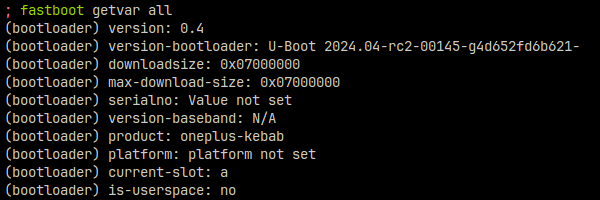
📸 Visual 1: Fastboot command-line diagnostic execution example screenshot
Example Terminal Command Output:
(bootloader) product is: A
(bootloader) imei is: 867XXXXXXXXX
(bootloader) sn is: MXXXXXXXX
Training and Competency Enhancement
An exceptionally comprehensive, highly digestible technical awareness training presentation was built from scratch exclusively for the frontline Customer Service (L1) team:
Covered Strategic Topics:
- What exactly is the manufacturer’s isolated cloud account architecture? How is it configured? How is a permanent hard reset administered?
- In which precise device lockout escalation scenarios must the ticket be definitively routed to the Technical Operations Center?
- Defining the absolute, strict boundaries differentiating supported repair topics from unsupported consumer actions.
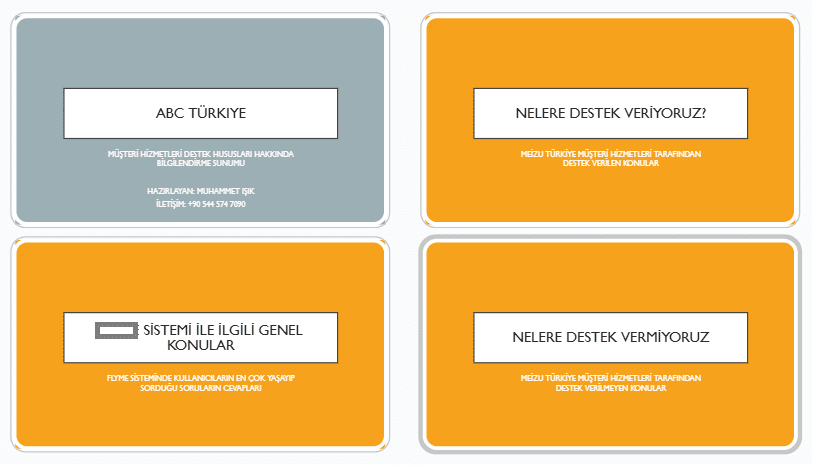
📸 Visual 2: Selected slide extracts from the training presentation – “Customer Service Technical Briefing Presentation”
User Issue Classification Processing Matrix:
|
Issue Origin Type |
Resolution Anchor Point |
Case Example |
|---|---|---|
|
Account-Related Flaws |
Customer Service Frontline (L1) |
The master Cloud synchronization password has been forgotten |
|
System Software Flaws |
Remote Operations Support (L1.5) |
The OTA Security package update completely failed |
|
Hardware Component Flaws |
Master Operations Center (L2/L3) |
Motherboard micro-short circuits resulting in permanent screen blackout |
Scope Management Boundaries
Baseline support parameters were defined with uncompromising operational clarity and transitioned into binding procedural directives:
✅ Explicitly Supported Topics:
- Lawful resetting of isolated Cloud account master passwords backed by uncompromised physical proof.
- Identification of structural Push notification communication or localized system refresh logic issues.
- Deep troubleshooting of Global application market (e.g. Play Store) infrastructure crashes.
- Legitimate OEM Lock removal and clearing procedures under validated Invoice and IMEI physical matching.
❌ Excluded Unsupported Topics:
- Flaws arising exclusively from unofficial regional installations (e.g. Chinese market native firmware flashed on global hardware).
- Hardware or software environments structurally manipulated via ROOT access or injection of external Custom ROM packages.
- Demands targeting the unlocking of core Bootloader chains to facilitate custom developer manipulation.
- Code-level crashes emerging from poorly optimized unintegrated third-party applications/gaming engines.
- Intervention requests regarding lost third-party Google Account (FRP) internal recovery workflows.
Results and Operational Gains
Operational Target Gains:
|
Metric |
Measured Impact |
|---|---|
|
Primary Filtering Success |
Basic end-user functional issues revolving around passwords, user accounts, and configuration settings were resolved directly at the frontline call center stage, significantly reducing unnecessary escalations to the hardware service center. |
|
Dead Traffic Elimination |
Logistically wasteful no-fault-found (NFF) returns hardware traffic unnecessarily entering the L2 service layer merely labeled as “Not Defective” was drastically truncated. |
|
Perception Standardization |
Systemic and technical reactionary responses deployed toward the customer base were salvaged from individual personal interpretation and wholly standardized into a rigidly consistent corporate presentation. |
|
L1 FCR Maximization |
Complex “First Contact Resolution” (FCR) SLA measurement metrics were elevated, immediately creating a direct positive velocity onto core customer satisfaction scaling. |
Institutional Memory Construction:
- 2 cornerstone SOP structural documents (The L1 Fundamental Training Deck + The L2/L3 Advanced Diagnostic Technical Master Guide) engineered throughout the project were permanently archived as foundational operational references.
- This comprehensive documentation core was hardcoded into the mandatory formal onboarding pipeline directed at every newly acquired operations personnel.
- Technical domain expertise was systematically codified from senior engineering memory into a structured, maintainable corporate knowledge base.
📋 Related Links
🔗 Project Card: VoC Analytics and Critical Quality Crisis Management