Adaptive Fighting Robot Training with Reinforcement Learning

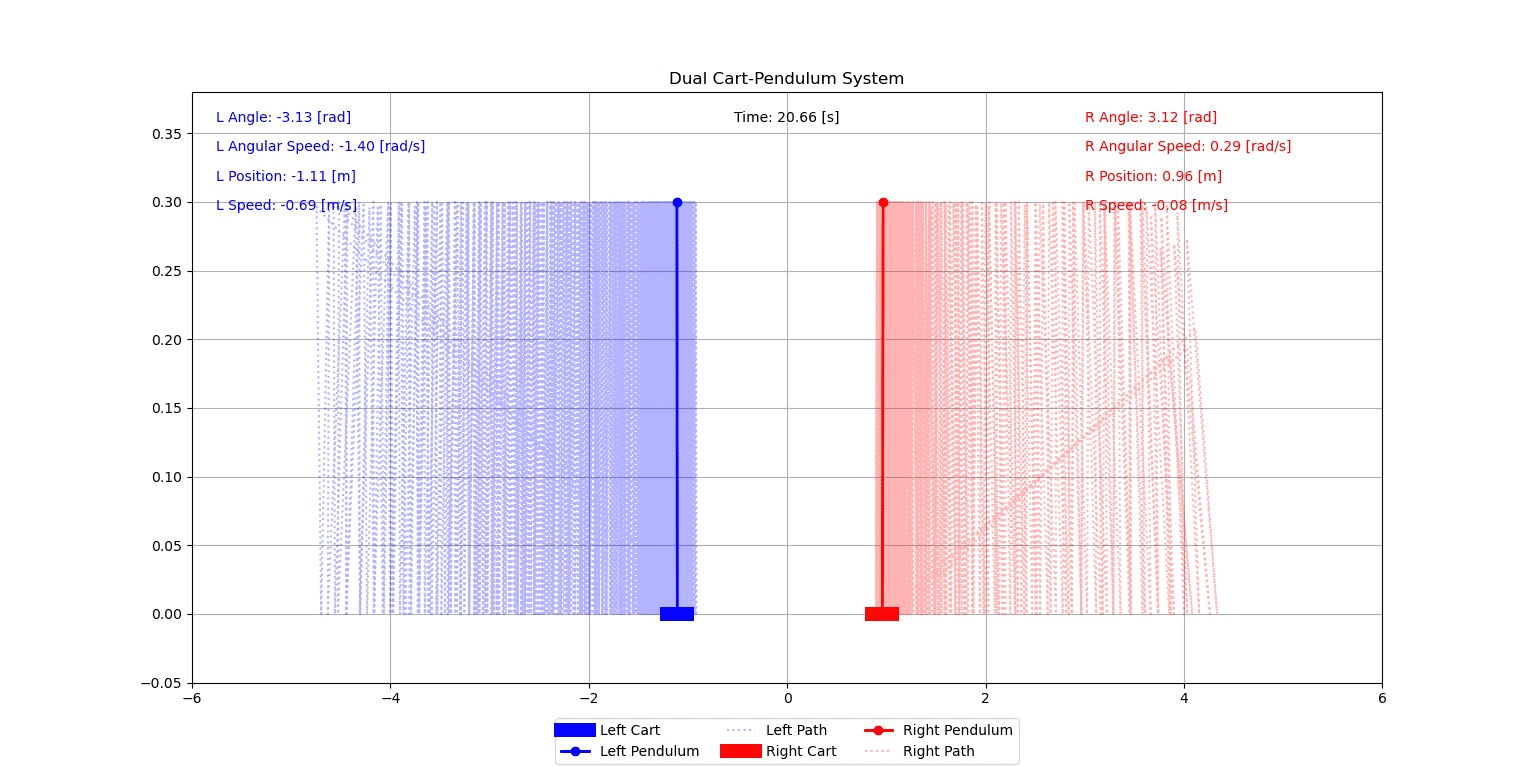
Comparative simulation evaluation of classical LQR and Deep Q-Network architectures on inverted pendulum dynamics: stabilization, model fragility, and adversarial resilience.
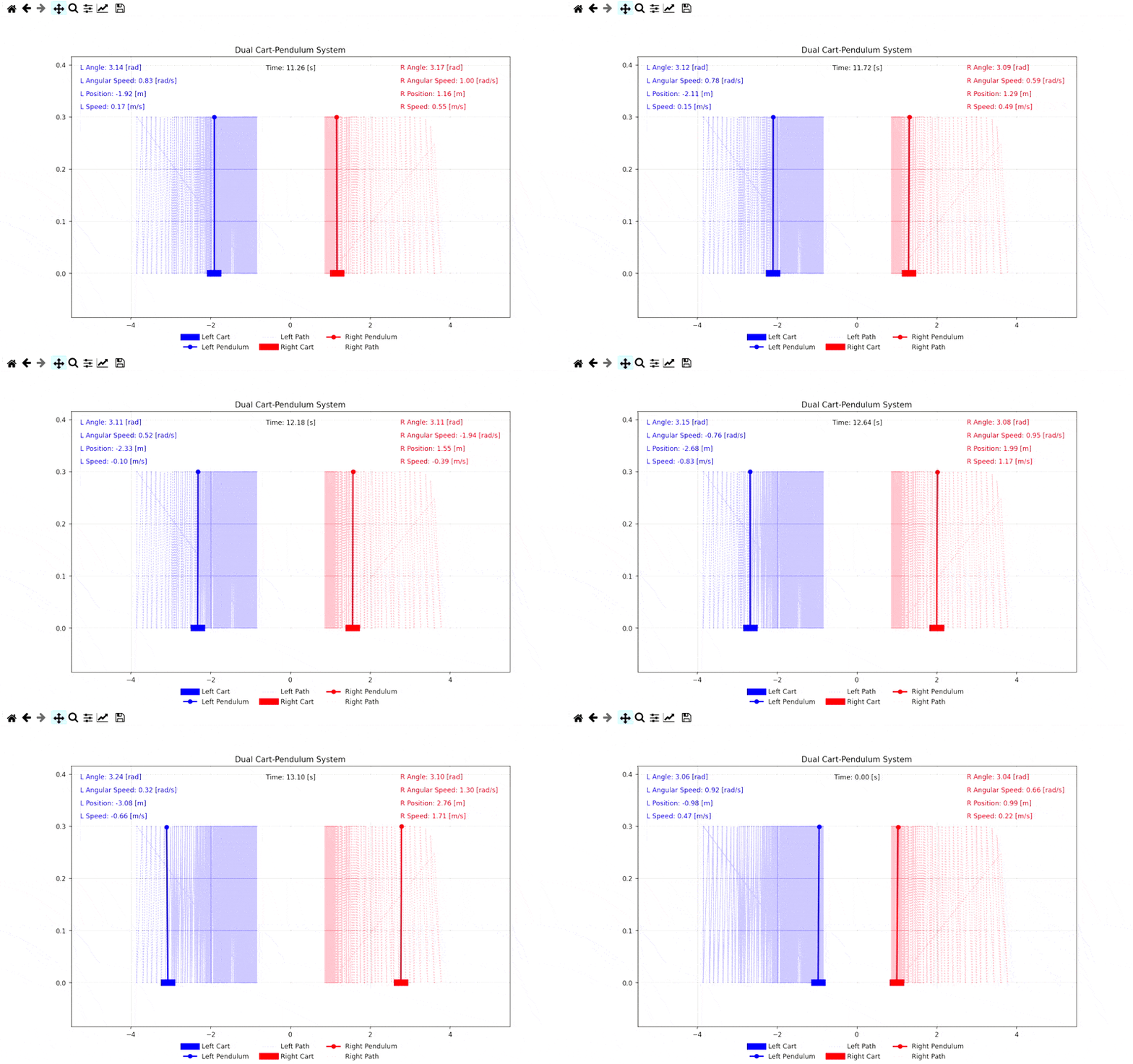
The simultaneous process of balance and adversarial combat automation of an intrinsically unstable system, represented by an inverted pendulum mechanics model, has been implemented with a model-free reinforcement-learning approach using a Deep Q-Network. A 4-phase design framework based on progressive difficulty calibration was executed, initiating from a baseline linear control (LQR) reference. Symmetric self-play competition across paired self-play agents was executed to reduce the risk that one policy becomes dominant during self-play and narrows the diversity of training scenarios.
ℹ️ Scope Note: This study is an academic simulation research project; no physical robotic chassis was constructed, and algorithmic robustness was validated using a dynamic physics engine.
Project Portfolio
|
Parameter |
Value |
|---|---|
|
Category |
Solutions Engineering |
|
Delivery Type |
Academic Research |
|
Status |
Proof of Concept |
|
Scale / Scope |
4-Phase Training Pipeline, Self-Play Adversarial Training |
Current Situation and Problem
Context: Inverted pendulum structures function as mechanically unstable systems. In scenarios demanding an external mechanical conflict (combat) vector, coordinating stabilization simultaneously with reactive action planning complicates the optimization problem. Critical Issues: Calibration logic bounded purely by static limits (such as LQR) exhibits an inherent tendency to fail within flexible operational domains where definitive system equations cannot be assumed. Optimizing models over static parameters (overfitting) empirically generates degraded performance under disturbances not represented in training.
|
Problem |
Detail |
|---|---|
|
Structural Instability |
The persistent requirement for an endless closed-loop feedback array to maintain inverted pendulum continuity |
|
Multiple Optimization |
Computing orientation positioning simultaneously while preserving native center-of-gravity stabilization |
|
Undefined Model |
Operating without the provision of a pre-calculated external dynamic system transfer function |
|
Robustness Under Disturbance |
The critically low tolerance of static algorithms to unpredictable, non-deterministic physical impacts |
Solution Architecture and Action
Architectural Approach: To examine performance degradation in under-defined control environments, a 4-phase training framework encompassing a variable difficulty curve was designed.
Applied Methodology:
Phase 1: LQR Baseline and Reference Data Extraction
Purpose: To map foundational system dynamics and catalog baseline responses for establishing a comparative testing platform.
- A native LQR controller block was built independent of external library functions.
- A customized test physics engine was computed leveraging the CTMS Michigan structural model.
- The formulated output matrices (state → action) were archived to serve as the reference model benchmark.
Phase 2: Self-Balancing and Standalone Stabilization
Purpose: Optimizing the system’s capability to maintain stability via reward-driven error functions without relying on a predefined input map or analytical reference.
- Training parameters were designated by migrating structural mechanics to a Deep Q-Network (DQN).
- Experience replay and a target network were used to stabilise training.
- Reward shaping design: The reward function penalized angular deviation, cart displacement error, and actuation effort to guide the agent toward stable equilibrium.
Phase 3: Disturbance Resistance and Attack
Purpose: The activation of physical anomalies within the given simulation scope and a discrete action space to test steady-state stability.
- Supplementary external forces (disturbance) mapped under a Poisson distribution were generated to simulate non-deterministic stochastic physical impacts.
- The computing structure subsequently weighted parameters commanding planned combat movements while preserving structural balance.
- The primary “Balance force” vector and the independent “Attack force” vector were processed across fully isolated phase spaces.
Phase 4: Self-Play Fighting and Adversarial Training
Purpose: Testing robustness under mutual adversarial pressure, building on the isolated training phases.
- To guarantee a measurement baseline across the array, two agent instances were initialised from the same neural-network starting weights.
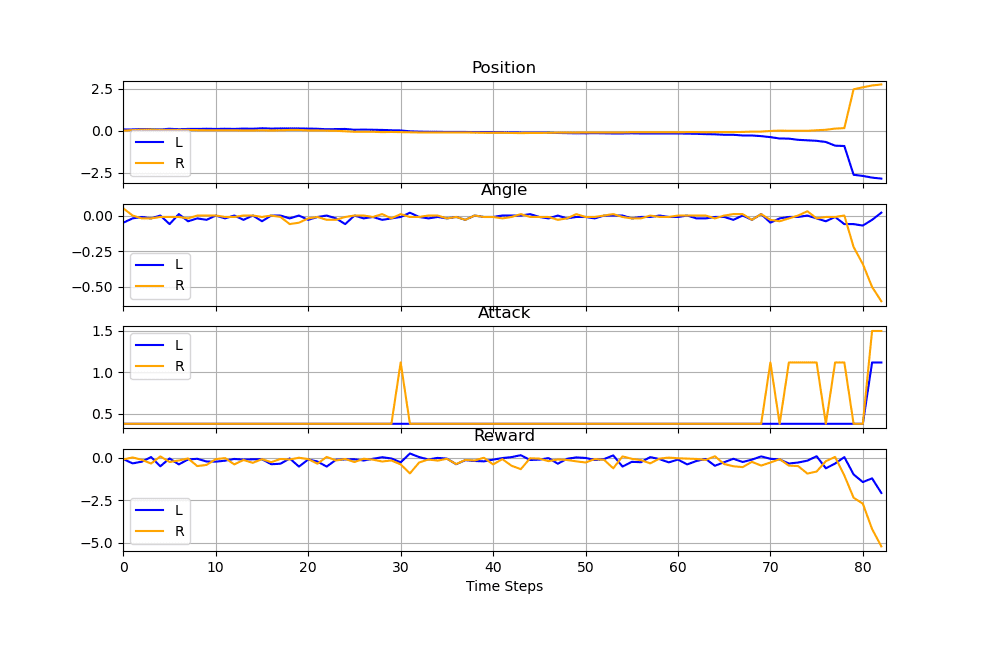
- During each independent epoch of the routine, dual modules executed logic disrupting the opponent’s balance function while calculating their own internal stabilization.
- The modules were cross-evaluated symmetrically against a dynamic clone reacting directly to mutual behaviors, explicitly discarding static functional parameters.
Architectural Decision: Employing two segregated neural network blocks invariably triggered asymmetric superiority deviations, categorized structurally within early epochs as “model dominance”. Unifying the calculation into a singular common network topology reduced this instability and constrained variance growth during training.
Dual Mode Operational Conditions:
- Isolated Mode: During early epoch cycles, competitive routines remain inactive, prioritizing exclusively Cartesian balance assessment.
- Combined Mode: As stabilization gradients hit operational maturity, adversarial action channels were activated simultaneously alongside primary balance outputs.
To prevent control disruption scaling within the system, the maximum threshold limits dictating combat actions were held to a fractional ratio of ~15% of the associated balance boundaries. (Balance Tolerance: [-10, +10] N, Attack Tolerance: [-1.5, +1.5] N).
Results and Operational Gains
|
Focus |
Verified Impact |
|---|---|
|
Concurrent Optimization |
Reaction vectoring variables were processed within identical operating cycles alongside mechanical stabilization curves. |
|
Robustness Improvement |
Implementing self-play weight updates explicitly restricted errors spawned directly by closed-loop static system assumptions that do not hold under disturbance. |
|
System Robustness |
Under mapped adversarial pressure scenarios, the implementation extracted more sustainable flexibility limits opposed to classic analytic LQR benchmarks. |
|
Model Elasticity |
Command control limits were accurately established internally without necessitating ideal, pre-formulated system equations from external sources. |
🎯 Test Results
|
Metric |
Value |
|---|---|
|
Test Episode Count |
300 Episodes |
|
Average Simulation Time |
~320 Frames/Steps |
|
Maximum Observed Peak |
700 Frames/Steps |
|
Exploration Multiplier |
0.0 (Zero exploration, pure policy) |
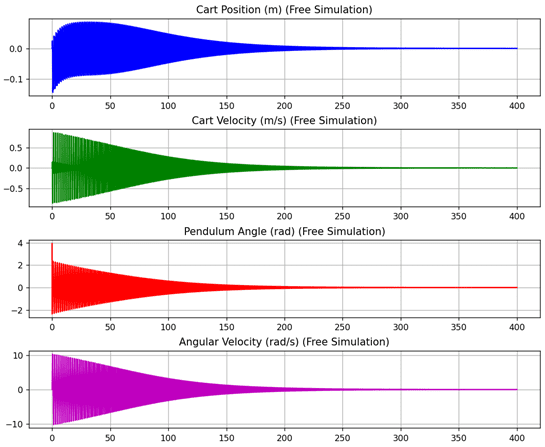
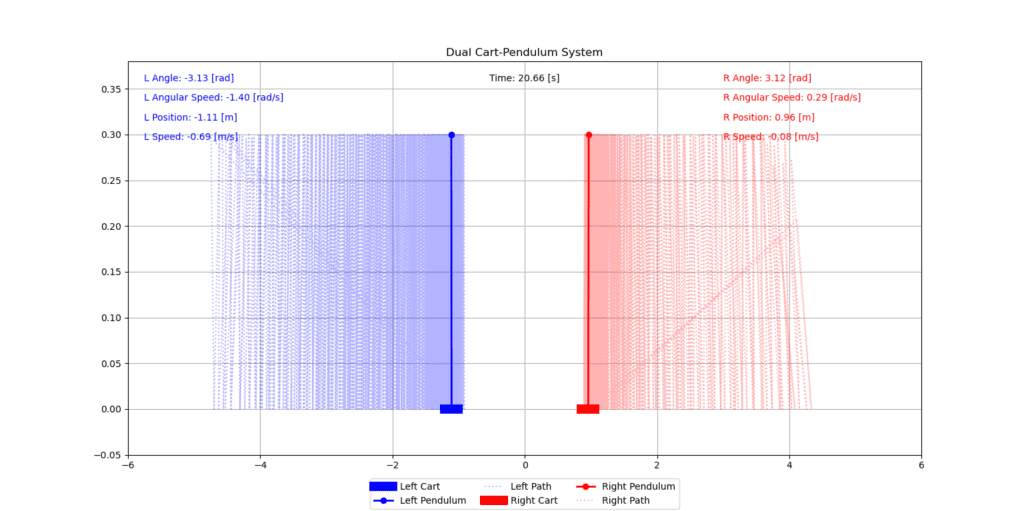
📊 Simulation Visuals

📥 Downloads
📄 Source Paper PDF: Makina Öğrenmesi Teknikleri Kullanılarak Bir Dövüşen Robotun Eğitilmesi (PDF, Turkish)
📋 Related Links
🔗 Companion Article: Classical Control is Not Dead: The Balance Between LQR and Deep Reinforcement Learning
📂 Source Code: GitHub / neural-adaptive-control-simulation
This research was conducted within the ITU Control and Automation Engineering program and presented under the graduation project scope.