Classical Control is Not Dead: The Balance Between LQR and Deep Reinforcement Learning

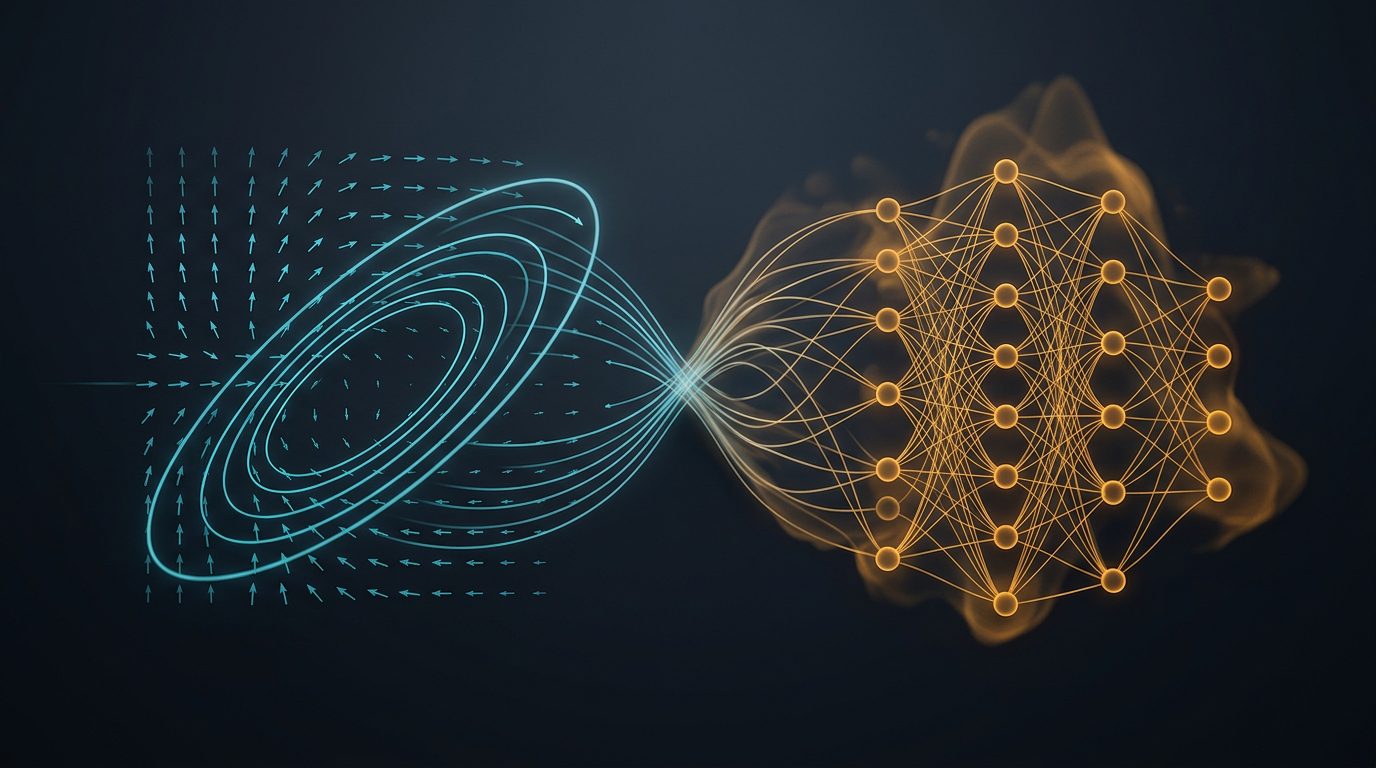
While modern industrial discourse fixates on AI-driven control, the vast majority of operational plants remain anchored to PID and LQR loops. Will reinforcement learning replace classical control, or will the two paradigms coexist across complementary architectural layers?
A recurring scene has unfolded across industrial automation conferences in recent years: stage presentations on autonomous, neural-network-driven controllers ignite widespread excitement, after which engineering teams return to their facilities and diligently continue tuning deterministic feedback gains. This is not a contradiction; it is the natural consequence of industrial safety, determinism, and certification demands. Mathematically provable classical control methods and experience-driven reinforcement learning algorithms are not competitors; when properly structured, they form complementary layers that mitigate each other’s inherent weaknesses.
The All-AI Misconception
Control engineering practice has long gravitated between two primary paradigms. On one side stand classical foundations such as PID, LQR, and model predictive control. These methods govern the overwhelming majority of industrial operations, offer analytical stability guarantees, and satisfy international functional safety certification requirements.
On the other side are reinforcement learning, deep neural networks, and adaptive control algorithms. While demonstrating remarkable successes in simulation environments and laboratory demonstrations, these data-driven approaches face significant scrutiny when proposed for direct integration into safety-critical loops.
The prevailing temptation across the technology landscape is to frame this as a zero-sum contest. However, research and simulation benchmarks conducted on inverted pendulum dynamics indicate that this dilemma is fundamentally misframed.
The Power of Classical Control: Why LQR Remains Dominant
The Linear Quadratic Regulator (LQR) represents one of the most reliable and mathematically elegant solutions in control theory. By solving an algebraic Riccati equation, an optimal state-feedback gain matrix is derived to ensure closed-loop stability. Computation requires fractions of a second, stability margins are analytically defined, and implementation complexity is minimal.
When implemented on an inverted pendulum model, an LQR controller achieves near-perfect stabilization around its nominal operating equilibrium. Steady-state error remains minimal, and the entire design pipeline is completely deterministic.
If LQR is so dependable, why does ongoing research seek alternative paradigms? The answer lies in the reality that LQR’s greatest strength is also its primary vulnerability: it assumes the mathematical model of the target system is exact, comprehensive, and invariant. Yet physical operating environments are neither linear nor stationary.
Model Fragility and Real-World Plant Dynamics
The breaking point of classical control manifests as physical system parameters drift away from calibrated nominal values. In simulation trials, increasing pendulum mass by a mere twenty percent degraded LQR damping performance substantially, inducing sustained oscillations and, under extreme conditions, total loss of stability.
This degradation is not a design flaw of LQR; it is an inherent characteristic. LQR optimizes control actions based entirely on a predefined state-space model. Whenever mechanical wear, temperature variations, payload fluctuations, or friction nonlinearities alter plant dynamics, the analytical optimality guarantee dissolves.
In real-world manufacturing plants, static models are practically non-existent:
- Bearings and gears suffer mechanical degradation over operating hours.
- Lubricant viscosity varies directly with ambient and operating temperature.
- Robotic arms manipulate payloads of varying mass and center of gravity.
- Mechanical backlash and clearances widen over equipment lifespans.
Faced with this drift, an LQR controller must either undergo frequent recalibration or be tuned with overly conservative gain margins, which sacrifices agility, tracking performance, and energy efficiency.
The Promise of Reinforcement Learning: Policy Synthesis via Experience
Deep Q-Networks and related reinforcement learning algorithms address this operational bottleneck through a fundamentally distinct paradigm. A reinforcement learning agent does not require an analytical state-space equation. By interacting directly with the plant inside a closed simulation loop, the agent discovers state-action policies that maximize cumulative rewards through trial and error.
Trained on identical inverted pendulum dynamics, a deep learning model incurs non-trivial initial training compute over multiple hours. Its steady-state jitter at the exact nominal equilibrium point may appear slightly less refined than an analytical Riccati solution.
However, when system parameters deviate, the operational balance shifts dramatically. When pendulum mass increases or stochastic external impulses are applied, the reinforcement learning agent maintains balance through its learned generalization capability. Rather than relying on a brittle static gain matrix, it leverages robust behavioral policies developed across wide operational variations.
The Slap Test: Simulating Dynamic External Disturbances
One of the most informative phases of our research involved an adversarial simulation setup where two agents exerted disruptive forces on one another. Dual pendulum carts shared the same physical plane, each maintaining its own vertical equilibrium while periodically delivering destabilizing impulse forces against the other.
This simulation architecture effectively models unpredictable external disturbances encountered in industrial environments:
- Sudden wind gusts and turbulent boundary conditions on wind turbines.
- Slippage and floor grade variations encountered by autonomous mobile robots.
- Tool-workpiece chatter and material inconsistencies in high-speed machining centers.
Under adversarial stress, the baseline LQR controller proved vulnerable against unmodeled impulse moments, frequently exceeding stability limits. Conversely, the Deep Q-Network policy, having been trained amidst persistent disturbances, developed an adaptive reflex that momentarily flexed the cart to absorb external kinetic energy while preserving vertical stability.
A notable architectural finding emerged during training: when using two separate neural networks, one agent rapidly developed structural dominance, suppressing policy diversity. Switching to a symmetric self-play architecture with shared initial weights guaranteed balanced adversarial opposition, allowing both agents to sustain balance for an average of 320 frames across 300 competitive evaluation episodes.
Reward Function Engineering: The Hidden Cost of Data-Driven Control
The most critical operational reality of reinforcement learning lies in reward shaping. An agent does not optimize human intent; it strictly maximizes the mathematical formulation of the reward function.
In early iterations of our setup, a simplistic reward based on the cosine of the pendulum angle was deployed. The agent successfully kept the pendulum upright but completely neglected track position, drifting off the boundary and toppling over. Introducing an angular velocity penalty subsequently created high-frequency acceleration impulses that would overstress mechanical actuators.
Successful convergence was achieved only by formulating a quadratic matrix penalty combining position error, angular deviation, and control effort. This reward structure shares the exact mathematical foundation of classical LQR cost matrices.
The engineering takeaway is clear: while reinforcement learning may be model-free, it is definitely not engineering-free. A poorly selected LQR weighting matrix yields suboptimal performance; a poorly formulated reward function in reinforcement learning can yield catastrophic, unstable physical behaviors.
Certification Boundaries and Functional Safety Standards
The primary barrier preventing immediate adoption of pure neural network controllers in industrial plants is formal certification:
- Verifiability: Functional safety frameworks including IEC 61508, ISO 13849, and avionics standard DO-178C mandate that control logic be deterministic and analytically provable across all operational envelopes.
- Transparency: An LQR controller produces an auditable linear gain matrix. A deep neural network comprises millions of non-linear parameters whose high-dimensional interactions cannot currently be guaranteed using conventional safety proofs.
This regulatory threshold does not preclude neural networks from industrial automation; rather, it dictates that safety-critical actuation boundaries remain anchored to proven classical methods.
The Layered Hybrid Architecture: Unifying Both Paradigms
The forward-looking engineering question is not “LQR or AI?”, but rather “Which tool should govern which architectural layer?”
| Evaluation Metric | When to Prefer LQR | When to Prefer Reinforcement Learning |
|---|---|---|
| Model Fidelity | High, analytically characterized | Low, uncertain or drifting |
| Operating Conditions | Deterministic and stationary | Dynamic and stochastic |
| Certification Need | Safety-critical, mandatory | Optimization / advisory level |
| Design / Compute Cost | Sub-second analytical solution | Multi-hour training cycle |
| Environmental Adaptation | Rigid / conservative | Highly resilient |
Industrial control architecture will increasingly rely on the layered convergence of both worlds:
- Safety & Stabilization Layer: The inner loop operates at high frequency using deterministic LQR, PID, or state-feedback controllers. The system is physically constrained from exceeding certified stability envelopes.
- Optimization & Adaptation Layer: The outer supervisory loop utilizes reinforcement learning policies to observe shifting operating conditions, tool wear, and payload variations, dynamically tuning gain parameters and trajectory setpoints for the inner controller.
This layered structure directly mirrors modern manufacturing realities, where deterministic PID loops maintain core machine control while supervisory analytics optimize throughput and predictive maintenance.
Conclusion
Classical control is not dead, nor is it destined for obsolescence. Industrial automation cannot compromise on mathematical certifiability, determinism, and safety compliance. LQR continues to fulfill these rigorous standards with minimal computational overhead.
Reinforcement learning resolves the blind spots of classical methods: parameter drift, dynamic disturbances, and operational adaptability.
True engineering progress lies in avoiding both uncritical AI enthusiasm and defensive conservatism, deploying artificial intelligence as an adaptive layer atop the provable foundations of classical control theory.
📚 References
Sutton, R. S., & Barto, A. G. (2018). Reinforcement Learning: An Introduction. MIT Press.
Mnih, V., et al. (2015). Human-level control through deep reinforcement learning. Nature, 518(7540), 529-533.
Anderson, B. D., & Moore, J. B. (2007). Optimal Control: Linear Quadratic Methods. Dover Publications.
IEC 61508:2010. Functional Safety of Electrical/Electronic/Programmable Electronic Safety-related Systems.
University of Michigan. Control Tutorials for MATLAB and Simulink (CTMS).
📋 Related Links
📂 Adaptive Fighting Robot Training with Reinforcement Learning: LQR and Deep RL Comparison
📄 Makina Öğrenmesi Teknikleri Kullanılarak Bir Dövüşen Robotun Eğitilmesi (PDF, Turkish)
🔗 GitHub Repository / neural-adaptive-control-simulation