IP Ratings vs Industrial Reality: Why Did IP65 Let Liquid In?

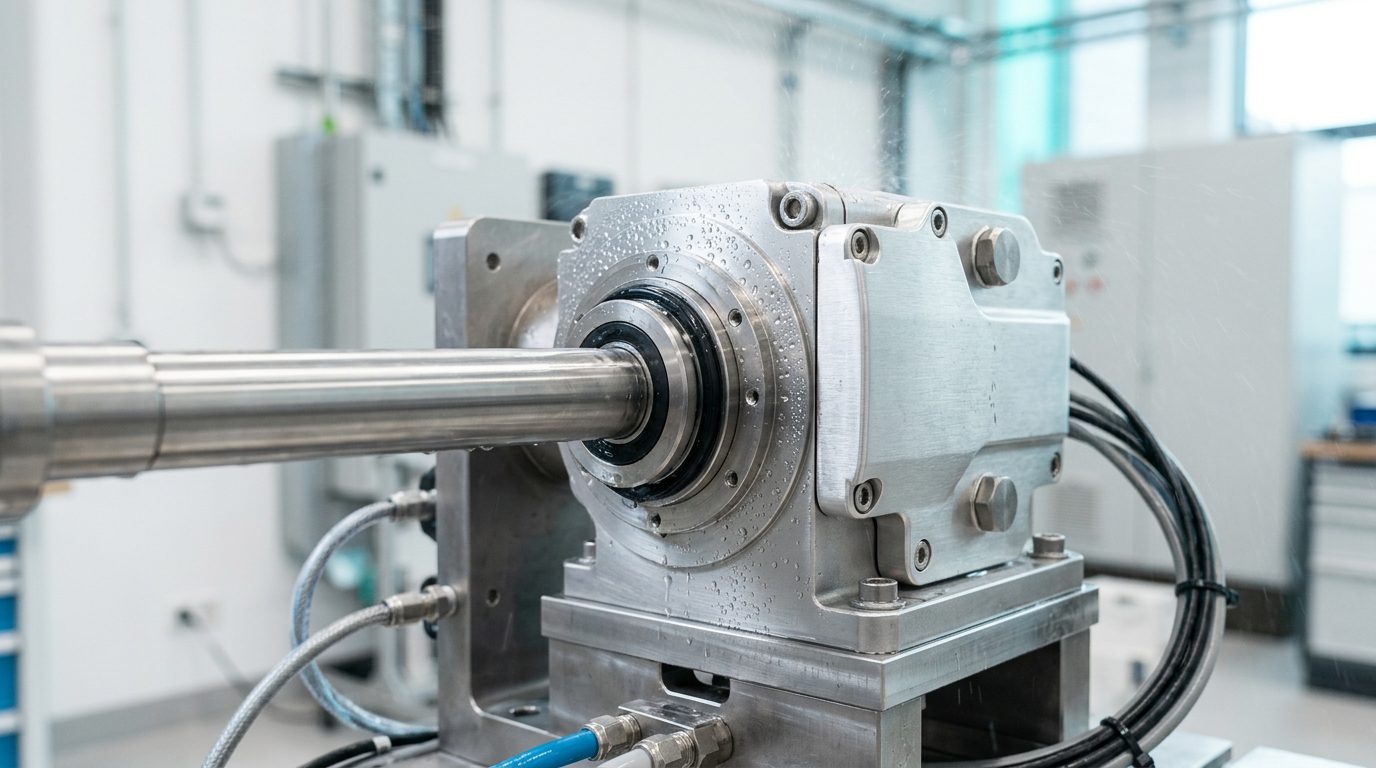
Knowing a protection rating does not mean understanding the application; engineering begins with understanding the operational environment.
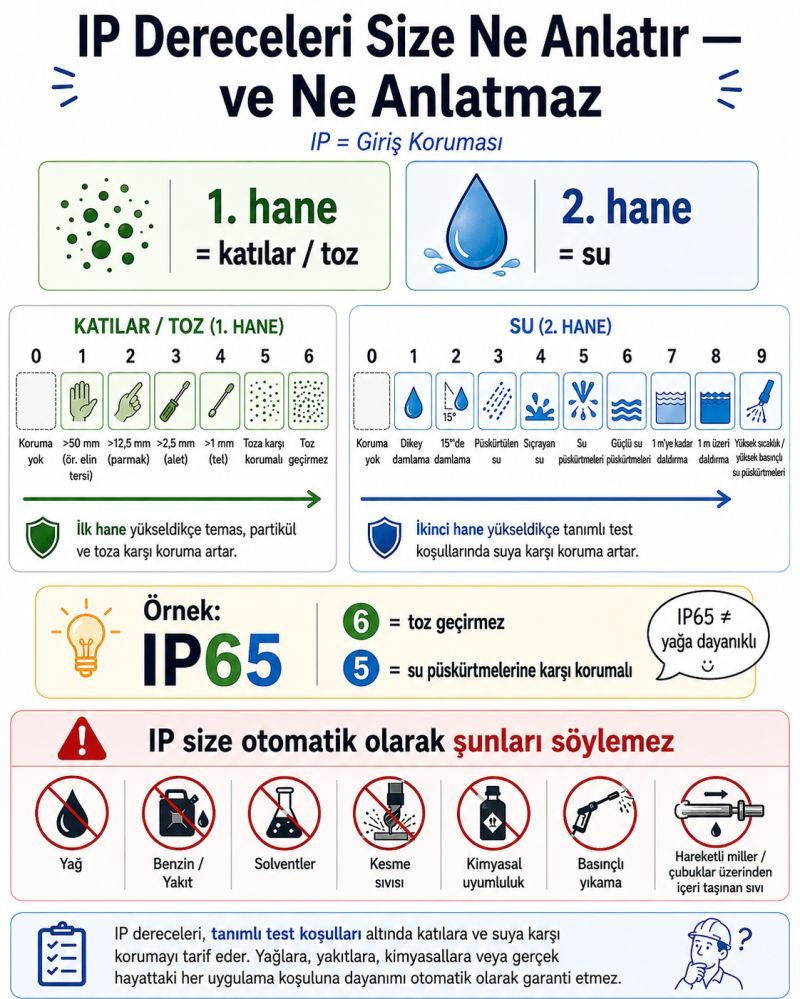
A product marked IP65 does not mean it can withstand every environmental condition encountered in the field. Standard tests focus on water and dust, but industrial oils, cutting fluids, and moving shafts completely alter the mechanics of sealing. When facing liquid ingress in the field, before blaming the rating, one must carefully evaluate the chemical and mechanical reality of exposure.
Standard Test Conditions and Out-of-Scope Risks
When a product is marked IP65, does that mean it can reliably withstand any unpredictable environmental condition in the field? Can we assume, for example, that oil will never penetrate the housing?
Let’s evaluate this together.
An Ingress Protection (IP) rating defines the specific laboratory conditions under which a device resists dust and water. However, this rating alone does not tell you whether the product:
- Can operate submerged continuously in oil,
- Can withstand industrial cutting fluids and coolants,
- Remains unaffected by high-pressure washdowns,
- Prevents fluid from creeping across a moving shaft or rod,
- Uses gasket materials that are chemically compatible with the surrounding substances.
Static Enclosures vs Dynamic Mechanical Shafts
The challenge becomes significantly more complex when moving mechanical parts are involved. Preventing water ingress through a static enclosure gasket is completely different from preventing a thin film of oil from traveling across a shaft that reciprocates continuously back and forth.
| Environmental Factor | Standard IP Test Scope | Real-World Field Risk |
|---|---|---|
| Dust and Particulates | Defined particle sizes and controlled vacuum test | Fine abrasive metal shavings, cake buildup, and seal wear |
| Water and Moisture | Defined spray angles, flow rates, and immersion depth | Condensation, internal vacuum from thermal cycling, and steam |
| Industrial Oils | Out of scope | Swelling, hardening, or chemical degradation of elastomer gaskets |
| Cutting Fluids (Coolants) | Out of scope | Low surface tension leading to micro-channel seepage |
| Moving Shafts and Rods | Predominantly static or limited motion testing | Dynamic strokes dragging fluid films past the wiper seal |
Asking the Right Questions When Liquid Ingress Occurs
Therefore, when encountering a scenario where “the product is IP65 but liquid got inside,” before asking “why did IP65 fail?”, the following diagnostic questions must be answered:
- What fluid or chemical did the equipment actually come into contact with?
- Is exposure continuous immersion or intermittent spraying?
- Is there localized mechanical pressure or high-pressure cleaning involved?
- What is the physical mounting orientation and drainage path?
- Does liquid make direct contact with moving dynamic surfaces?
- Are the enclosure and gasket materials chemically compatible with the active chemicals?
Knowing an ingress rating does not mean understanding the physical application. A product certified to resist water and dust does not automatically resist industrial oils. Compare apples with apples, not apples with oranges.
A datasheet defines the product’s standardized limits, but true engineering begins with understanding the actual operational environment.
📋 Related Links
🔗 Measurement and Test Stability: Is the Product Defective, or the Measurement System? Verifying Test Setups Before Blaming Hardware
📄 Hardware & Service Architecture: Hardware Architecture to Overcome the IT/OT Barrier: Secure Remote Service for Machine Builders
📂 Operations & Diagnostics: End-to-End Service and Diagnostic Operations Architecture for IoT and Wearable Device Ecosystems
Last updated: September 8, 2026 | Version: 1.0