The Future of Railways at 5G Speed: FRMCS Transition Roadmap for Turkey

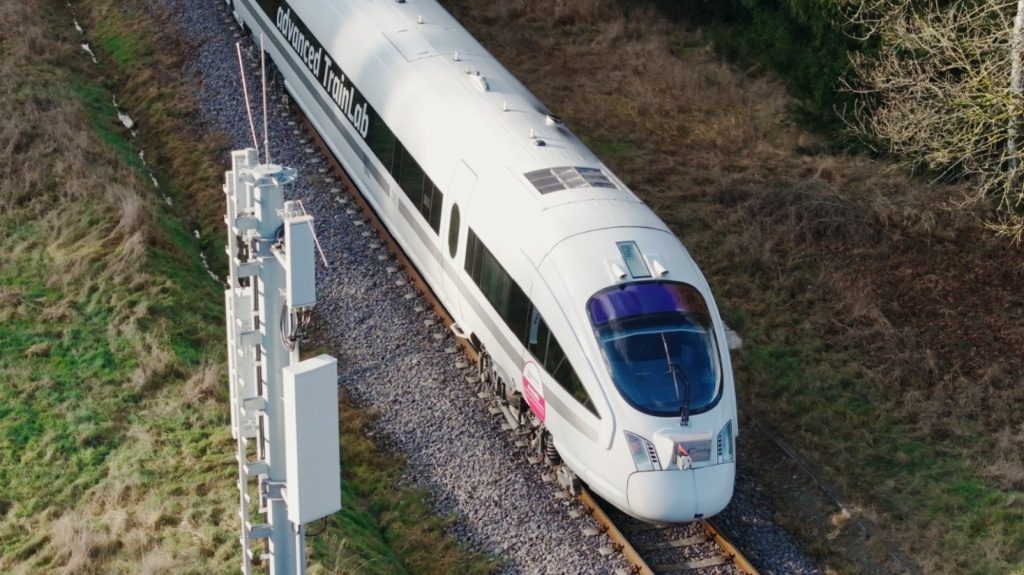
Railway communications are no longer merely voice calls between dispatchers and drivers, but the modern digital nervous system orchestrating vital signaling and automated train control.
Across Europe, railway infrastructure is approaching a technological turning point as legacy 2G-based GSM-R systems make way for the next-generation 5G Future Railway Mobile Communication System (FRMCS) standard. Live field trials conducted by Nokia and Deutsche Bahn on a dedicated 1900 MHz standalone 5G radio network confirm that the transition has moved decisively beyond laboratory prototyping. This engineering analysis examines why GSM-R must be decommissioned, dissects the dual realities of Turkey’s current network infrastructure, and outlines a pragmatic six-step roadmap for a controlled national rollout.
Modern trackside communications carry vital signaling, automated train protection telemetry, cybersecurity safeguards, and real-time operational diagnostics. As Europe accelerates the migration toward FRMCS, railway authorities worldwide face the imperative of upgrading aging legacy infrastructure.
As Europe accelerates the migration toward FRMCS, railway authorities worldwide face the imperative of updating aging legacy networks. Understanding what this technological leap entails and where Turkey stands in the transition is vital for infrastructure planners.
Field Trials Signal the Transition and the German Milestone
In September 2025, Nokia and Deutsche Bahn deployed a dedicated 5G radio network operating on the 1900 MHz frequency band along an active German test track. Built upon a Standalone 5G core architecture, this deployment proved that FRMCS is ready for operational validation under harsh field conditions.
The objective was to rigorously test mission-critical voice communications, ultra-reliable low-latency telemetry transmission, and priority emergency group calling in real operating environments. The successful validation confirmed that FRMCS can satisfy strict safety requirements, marking the start of practical commercial transition across European corridors.
Turkey’s Current Landscape and the Dual-Track Reality
Examining Turkey’s railway communication network reveals two distinct operational environments:
On one hand, high-speed rail lines and major transport corridors such as Kayseri-Sivas feature modern GSM-R systems deployed through multi-vendor contracts with providers including Huawei, Nokia, NSN, and Kapsch. These segments deliver dependable digital radio coverage that supports high-speed train operations reliably.
On the other hand, substantial portions of the national conventional network remain unequipped with either ETCS signaling or digital radio coverage. Official infrastructure reports confirm that several lines continue to operate under telephone-based train order dispatching systems. Consequently, Turkey manages a hybrid architecture: modern high-speed lines operate with international standards, while conventional lines still require foundational modernization.
Why GSM-R Is Approaching Obsolescence
While GSM-R continues to perform safely today, its underlying architecture dates back to 1990s 2G cellular specifications. This legacy heritage creates several fundamental engineering bottlenecks:
- Circuit-switched voice channels limit data throughput to narrowband bandwidths,
- High end-to-end latency prevents modern closed-loop digital control architectures,
- Capacity constraints make it impossible to stream high-definition onboard video or dense Internet-of-Things condition monitoring data,
- Moving-block signaling and automated train operation require throughput levels that 2G radio channels cannot provide.
Beyond these technical constraints, telecommunications vendors have formally announced that global support and spare parts availability for GSM-R equipment will end between 2030 and 2035. Transitioning to FRMCS is therefore not an optional upgrade, but a mandatory requirement for network continuity.
A Phased Six-Step Transition Roadmap for Turkey
Rather than pursuing an abrupt, high-cost overhaul, Turkey can manage this technology migration through a structured six-step roadmap that balances financial realities with operational safety:
- Prioritizing Strategic Corridors: Initial investments should focus on high-traffic passenger routes, high-speed rail links, and critical international freight corridors connecting to the European Trans-European Transport Network.
- Establishing Coexistence Strategies: GSM-R cannot be decommissioned overnight. Operational and maintenance plans through 2035 must support parallel dual-radio running, preventing frequency interference between legacy 2G and incoming 5G installations on both trackside and onboard equipment.
- Deploying National Test Tracks: Mirroring European testing tracks, a designated railway segment should be equipped with a private 5G rail network. This environment enables field validation of vendor interoperability, cross-border roaming protocols, and mission-critical voice resilience before widespread deployment.
- Harmonizing Spectrum and Regulations: The Ministry of Transport and Infrastructure, the Information and Communication Technologies Authority (BTK), and railway operators must align domestic frequency allocations with international CEPT and ETSI spectrum mandates, securing dedicated bands for rail operations.
- Strengthening Domestic Engineering Ecosystems: Transitioning to 5G presents an opportunity to develop local industrial capabilities. Engaging domestic defense and telecommunications manufacturers in designing FRMCS radio heads, core network functions, and cab radio terminals reduces long-term external dependency in critical infrastructure.
- Diversifying Financing Mechanisms: Funding widespread infrastructure renewal requires combining public budgets with Public-Private Partnerships, European Investment Bank facilities, green transport modernization funds, and phased capital allocation.
A Structured Path toward Autonomous Railways
The field validation of 5G railway networks in Germany indicates that the FRMCS transition is accelerating across the continent. To maintain interoperability and ensure long-term operational resilience, Turkey must continue modernizing existing conventional lines while architecting future track upgrades to be natively compatible with 5G radio standards.
By adopting a phased, disciplined deployment strategy anchored in local technological participation, Turkey can safeguard vital transportation infrastructure and build enduring domestic engineering capability.
📚 References
Nokia (2025). Nokia deploys world’s first 1900 MHz 5G radio network on Deutsche Bahn test track supporting FRMCS. Nokia Press Release.
RailTech (2025). Nokia, DB deploy first commercial FRMCS network on German test track. RailTech Europe.
Capacity Media (2025). Nokia deploys world-first 1900 MHz 5G radio network on Deutsche Bahn test track. Capacity Media.
European Union Agency for Railways (ERA) (2024). Radio Communication: GSM-R Future and Transition Options. ERA Technical Report.
Huawei Enterprise & TCDD. Central Network Management System Project Case Study: Monitoring and Managing Railway Communication Infrastructure. Huawei Enterprise Case Study.
Ministry of Transport and Infrastructure (2023). Transport and Communications Council Railway Sector Report. Republic of Turkey Ministry of Transport and Infrastructure.
Aboud, M. A., Zangar, N., Langar, R., Berbineau, M., & Madec, J. (2025). Optimizing Resource Allocation and Scheduling towards FRMCS and GSM-R networks coexistence in Railway Systems. arXiv:2503.21300.
📋 Related Links
🔗 Technology and Systems Blog Category
🔗 Railway Signaling Relay Selection: Vital and Industrial Safety Relays
🔗 Physical Threat Vectors in Critical Railway Infrastructure: From Theft to Sabotage
📄 Original LinkedIn Pulse Article